Walk into any grocery store's cleaning aisle and you'll face hundreds of products claiming to clean "everything." The reality — most of them are wrong for at least half the surfaces in your home. Using the wrong cleaner doesn't just leave residue or streaks. It permanently damages finishes, strips protective coatings, dulls natural stone, and shortens the life of your investments by years.
After 10+ years of professional cleaning across NJ, NY, and CT, we've seen the same expensive mistakes repeat — hardwood floors ruined by vinegar, granite countertops etched by ammonia, upholstery destroyed by bleach spots. This guide walks you through choosing the right cleaner for every major surface in your home, avoiding the most damaging mistakes, and knowing when store-bought products aren't enough.
The 4 Main Types of Cleaners
Understanding what’s actually in your cleaner tells you where it’s safe to use. Every cleaning product falls into one of four chemistry categories — and mixing them up causes 90% of home damage.
Alkaline Cleaners (pH 8–14)
Alkaline cleaners break down organic matter — grease, oils, protein stains, cooked-on food. They include most degreasers, oven cleaners, and heavy-duty kitchen products.
Best for: kitchen counters (except stone), stovetops, grill grates, greasy garage floors, ovens.
Avoid on: aluminum (causes pitting), natural stone (etches surface), waxed floors (strips wax), hardwood (damages finish).
Common products: Simple Green, Fantastik, Easy-Off, Mr. Clean.
Acidic Cleaners (pH 0–6)
Acids dissolve mineral deposits, rust, hard water stains, and soap scum. Most bathroom cleaners and toilet bowl cleaners are acidic.
Best for: toilet bowls, bathtubs, shower doors, hard water stains, rust removal.
Avoid on: natural stone (marble, granite, travertine — permanent etching within minutes), hardwood floors, brass and bronze fixtures, colored grout.
Common products: CLR, Lime-A-Way, Kaboom, most toilet cleaners, vinegar.
Neutral Cleaners (pH 6–8)
pH-neutral products clean gently without chemical reactions. Safe on virtually all surfaces including delicate materials.
Best for: hardwood floors, natural stone, sealed surfaces, everyday maintenance, upholstery pre-treatment.
Trade-off: Less effective on heavy grease and stubborn stains than alkaline cleaners. Requires more physical scrubbing.
Common products: Bona Hardwood Floor Cleaner, Method Squirt & Mop, Dr. Bronner’s Sal Suds, most “gentle” formulations.
Enzymatic Cleaners
Enzymes are biological cleaners that break down proteins, fats, and organic matter at the molecular level. Unlike chemical cleaners, they continue working for hours after application.
Best for: pet urine, blood stains, vomit, food stains on upholstery, drain maintenance, laundry stains.
Trade-off: Slower action (15+ minutes contact time), doesn’t work below 40°F, deactivated by hot water and disinfectants.
Common products: Nature’s Miracle, Rocco & Roxie, Bissell Pet Stain & Odor, professional-grade enzymatic solutions used in pet stain and odor removal services.
Right Products for Each Surface: A Room-by-Room Guide
Kitchen
Granite, marble, and quartz countertops: pH-neutral stone cleaner or diluted dish soap. Never vinegar, lemon, bleach, ammonia, or all-purpose cleaners containing acids or bases. Even one accidental exposure to lemon juice can leave permanent etching on marble.
Sealed wood cabinets: pH-neutral wood-safe cleaner (Method Wood Cleaner, Murphy’s Oil Soap in extreme dilution). Avoid ammonia products and furniture polish with silicone — creates buildup.
Stainless steel appliances: dedicated stainless steel cleaner (Bar Keepers Friend, Weiman) or mix of water + few drops of dish soap. Wipe with grain. Never use chlorine bleach — pits the finish permanently.
Tile floors: pH-neutral floor cleaner or diluted dish soap. Bleach is OK occasionally for whitening white grout but shouldn’t be regular use.
Grease on stovetops: alkaline degreaser (Krud Kutter, Simple Green) for baked-on grease. Baking soda paste works for daily cleaning.
Bathroom
Ceramic tile and porcelain: dedicated tile cleaner or diluted bleach solution (1:10). Vinegar works but not on natural stone tile.
Grout: hydrogen peroxide + baking soda paste for whitening. For deep discoloration, professional tile and grout restoration uses commercial-grade cleaners with heat extraction.
Glass shower doors: vinegar + water 1:1 for hard water spots (only if not against natural stone). Weekly squeegee prevents buildup — the most effective bathroom maintenance habit.
Toilet bowl: acidic toilet cleaner (Lysol Toilet Bowl, Clorox toilet gel). Not bleach — most modern toilet cleaners work better on mineral rings.
Sink faucets (chrome/nickel): dish soap and water. Avoid abrasive cleaners — scratches finish and creates roughness that traps grime faster.
Living Room & Bedrooms
Hardwood floors: pH-neutral wood cleaner only. Bona is the industry standard. Never vinegar (strips finish), never steam mops (warps wood), never Pledge (creates silicone buildup). See our full hardwood floor care guide for details.
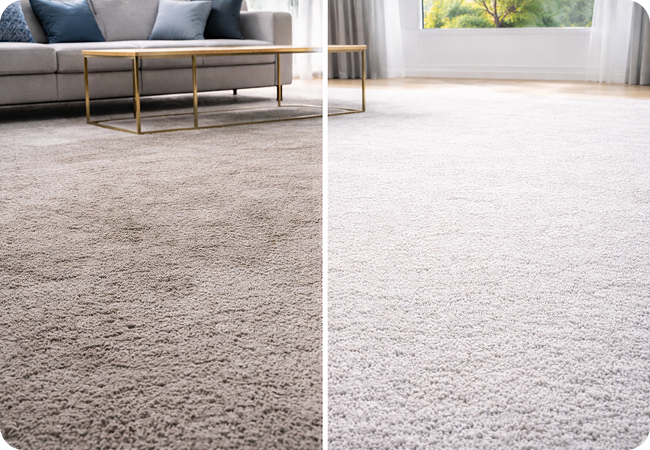
Carpet spot cleaning: club soda for fresh spills, enzymatic cleaner for pet accidents, oxygen-based stain remover (OxiClean) for older stains. Never use hot water on protein stains (blood, egg, dairy — sets them permanently).
Upholstery: check the fabric care code first (W, S, WS, or X on the tag under cushion):
- W — water-based cleaners only
- S — solvent-based dry cleaners only
- WS — either method works
- X — professional cleaning only (vacuum only at home)
Windows: ammonia-based cleaner (Windex) or vinegar + water. Never use these on tinted windows — breaks down the tint film. For streak-free results, use microfiber not paper towels.
Electronics screens: dedicated screen cleaner or slightly damp microfiber cloth. Never Windex — damages anti-glare coating on modern displays.
High-Contact Surfaces (Disinfection)
Doorknobs, light switches, remote controls: 70% isopropyl alcohol (most effective concentration) or EPA-approved disinfectants. Contact time matters — most disinfectants need 30 seconds to 5 minutes of wet contact to actually kill bacteria and viruses.
Kitchen counters (food prep): dedicated food-safe sanitizer or diluted bleach (1 tablespoon per gallon of water). Rinse after contact time.
8 Cleaning Products You Should Never Mix
Mixing common cleaners creates toxic gases that can cause serious injury or death. These combinations happen more often than people realize.
1. Bleach + Ammonia = Chloramine Gas
Toxic gas causes chest pain, shortness of breath, and lung damage. Ammonia is in Windex, many multi-surface cleaners, and some floor cleaners. Never mix.
2. Bleach + Vinegar = Chlorine Gas
Same gas used as a chemical weapon in WWI. Even small amounts cause burning in eyes, throat, and lungs. Both products individually are useful — never together.
3. Bleach + Rubbing Alcohol = Chloroform
Creates chloroform and hydrochloric acid. Damages nervous system, causes dizziness and unconsciousness.
4. Hydrogen Peroxide + Vinegar = Peracetic Acid
Corrosive acid that damages skin, eyes, and respiratory system. Note — using peroxide and vinegar sequentially (one, then rinse, then the other) is actually a safe disinfection method. Mixing them in a bottle is dangerous.
5. Different Drain Cleaners
Never mix drain cleaner brands or old + new applications. Different chemistries (some acidic, some alkaline) react violently — can shoot boiling caustic liquid out of the drain.
6. Baking Soda + Vinegar
Not toxic, but neutralizes both. Common “natural cleaning” recipe that produces mostly water and salt. Use them separately for actual cleaning power.
7. Two Different All-Purpose Cleaners
Sounds obvious but happens often — using Fantastik, then spraying Lysol before wiping. Unknown chemistries may react. One cleaner at a time, wipe fully, then use another.
8. Bleach + Any Other Cleaner
Safe rule: bleach only with water. Never mix bleach with any product except plain water.
Eco-Friendly vs Chemical: Which Actually Works?
The “natural vs chemical” debate misses the point. Chemistry is chemistry — vinegar is a chemical (acetic acid). The real question is: does the product work for your specific surface without causing damage?
Where Eco-Friendly Products Win
- Daily maintenance on all surfaces (hardwood, stone, upholstery)
- Pet and child safety — no toxic residue on floors where they play
- Enzymatic cleaners — genuinely more effective than chemicals for protein stains
- Homes with allergies — fewer VOCs (volatile organic compounds) in the air
- Environmentally responsible — safer wastewater going into NJ water systems
Where Chemical Products Win
- Heavy grease and baked-on food — alkaline degreasers work faster
- Disinfection — EPA-approved products have verified kill rates
- Mold and mildew — bleach and dedicated fungicides work when natural options don’t
- Rust and hard water stains — acidic cleaners like CLR are irreplaceable
- Time-sensitive situations — chemical cleaners typically work in 30 seconds vs 15+ minutes for enzymatic
The Middle Ground
Most professional cleaning services (including Atom Cleaning Co) use eco-friendly products for daily and routine work, and targeted commercial-grade products only when necessary — like enzymatic solutions for pet urine, specialized wood cleaners for hardwood, or extraction-grade solutions for deep carpet cleaning. This gives homeowners the safety of green cleaning with the effectiveness of professional formulations when it matters.
When Professional-Grade Products Are Worth It
Store-bought products are formulated for general use by untrained users — diluted for safety, simplified for shelf stability, and marketed for broad appeal. Professional-grade products are different in three ways.
Concentration. Professional cleaners are 3–10× more concentrated than consumer versions. A pro applies at proper dilution for the specific surface and stain type — often ending up gentler than store-bought while more effective.
Specificity. Consumer products aim for “clean everything.” Professional cleaners are matched to specific problems — protein stains, oil-based stains, mineral deposits, biological contamination. Right product for right problem.
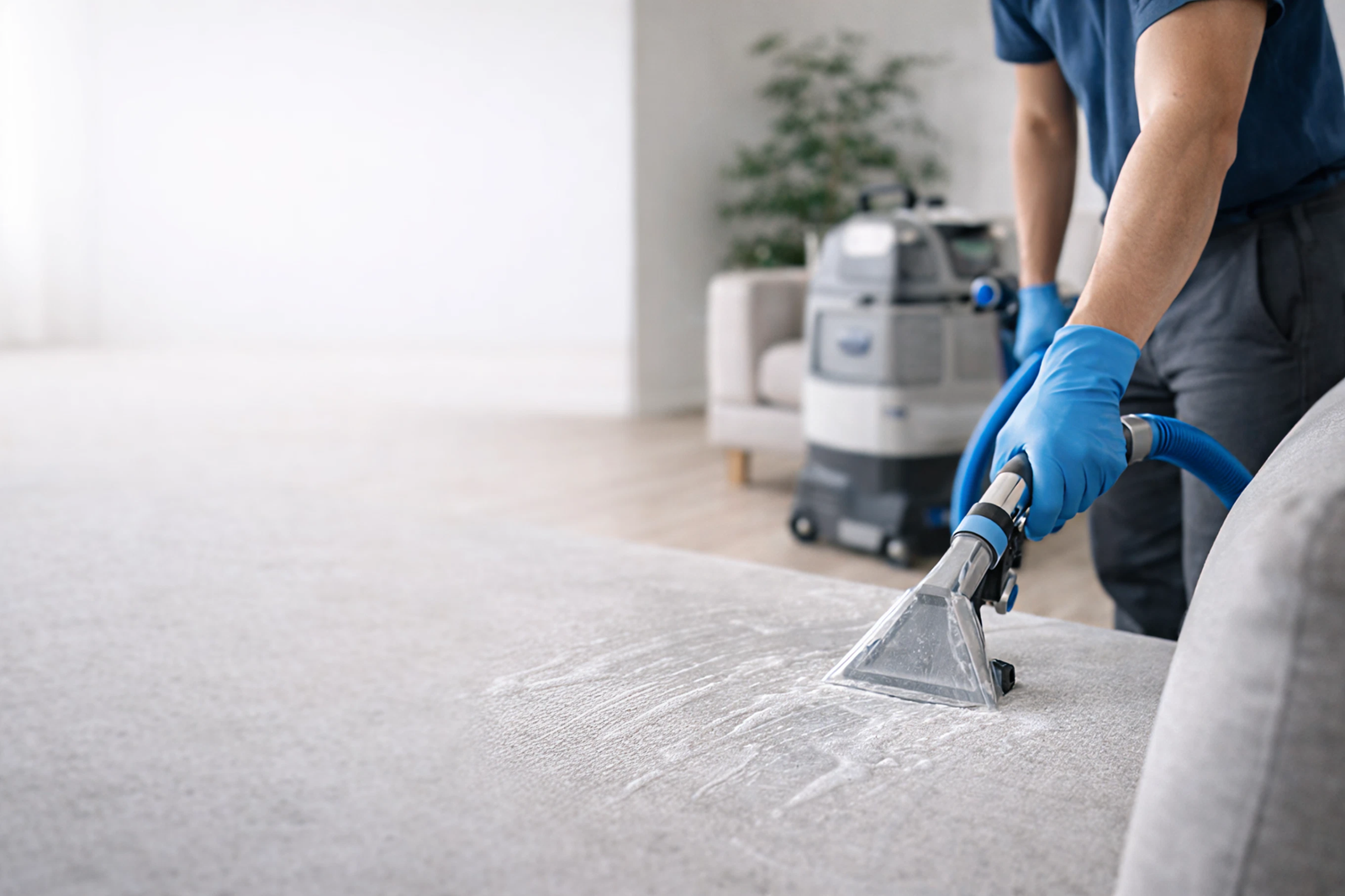
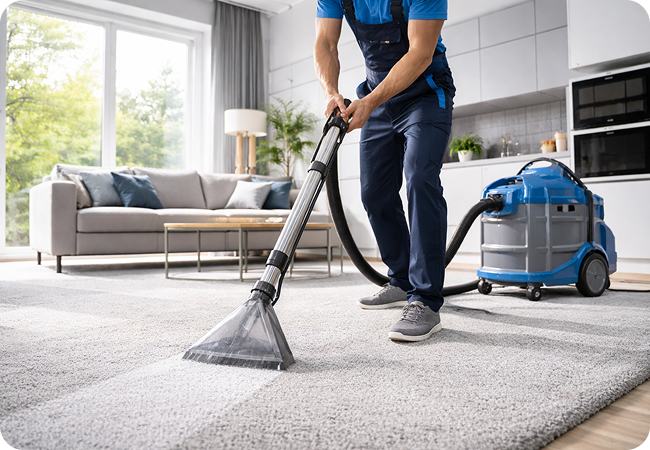
Equipment integration. Truck-mounted extraction, sub-surface injection, and hot-water extraction systems require solutions formulated to work at high pressure and temperature. Store-bought products aren’t designed for professional equipment.
When professional service makes sense:
- Old set-in stains that DIY methods haven’t removed
- Pet urine reaching padding or subfloor — requires sub-surface treatment
- Post-construction cleaning — professional-grade products cut through dust and debris efficiently
- Move-in/move-out cleaning — fastest way to fully sanitize a space
- Allergy sensitivities — professional cleaning removes deep allergens store-bought products can’t reach
- Time savings — a professional deep clean of the whole house takes hours vs weekends of DIY
Atom Cleaning Co uses professional-grade eco-friendly products across our 12 cleaning services — carpet, hardwood, upholstery, tile & grout, and more. Serving Bergen, Hudson, Essex, and 9 more counties across NJ, NY, and CT.
Choosing Cleaning Products FAQ
Yes. Vinegar’s acidity gradually strips polyurethane finish over 6–12 months of regular use — floors look dull, hazy, and lose protection against future damage. Use pH-neutral wood cleaners (Bona, Method) instead. If your floors are already dulled from vinegar, deep cleaning followed by a maintenance coat can often restore them without full refinishing.
Almost always no. Kitchens have too many different surfaces — stone countertops need pH-neutral, greasy stovetops need alkaline degreasers, stainless steel needs specific formulations. Using one product on all surfaces damages at least one of them long-term. Keep 3–4 specific cleaners under the sink instead.
Yes — enzymatic cleaners are among the safest cleaning products available. They contain beneficial bacteria that break down organic waste, with no toxic residue. Safe for skin contact and around pets and children. Just make sure surfaces dry before children crawl on them.
Sanitizing reduces bacteria to safe levels (99.9% reduction) — good for daily kitchen and bathroom maintenance. Disinfecting kills 99.999% of bacteria and viruses — needed for illness situations (someone sick in the house, raw meat contamination). Both require specific contact time to work — reading the label is critical.
Some have mild antimicrobial properties (tea tree, lavender, thyme) but they’re weak compared to actual cleaning products. Essential oils are useful for scent and psychological effect but shouldn’t be relied on for real cleaning or disinfection. Great as an addition to real cleaners, poor as a replacement.
Three reasons — professional products are more concentrated (safer at proper dilution), more specialized (matched to specific problems), and formulated for professional equipment like truck-mounted extraction. Combined with proper technique and equipment, this produces results that consumer products physically can’t match, regardless of how hard you scrub.